“Coming home to ourselves requires more than embracing the parts we like. It means making space for the parts we have learned to hide, reject, or fear. Wholeness begins when every part of us has a place to belong.”
— Fareda Barlas
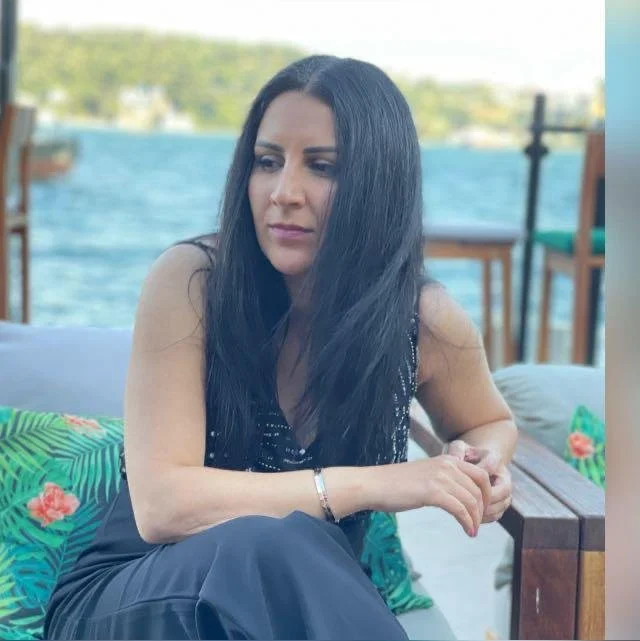
Fareda Barlas
Integrative Psychotherapist for Individuals and Couples
EMDR Therapist & Relationship Specialist
MA, Adv. Dip. Psychotherapy
UKCP Accredited | MBACP
I am an Integrative Psychotherapist offering therapy for individuals and couples on both a long-term and time-limited basis.
I came to this work after my own long relationship with it. I believe deeply that we cannot ask our clients to search for truths within themselves if we are not willing to do the same, and the journey I have taken alongside my own therapist is what allows me to sit alongside others in the parts of life that feel most tender, most complex, and at times most painful.
I believe every story is unique, which is why I do not believe one size fits all when it comes to therapy. My training as an Integrative Relational Psychotherapist allows me to draw on a range of approaches depending on what each person needs — psychodynamic, attachment-based, existential, gestalt, humanistic, and body-oriented psychotherapy — adapting the work to the person sitting in front of me rather than to a particular method.
How I work
I work with the whole of a person. We cannot, in my experience, sit only with the parts that feel familiar, acceptable, or easy to identify with: the capable parts, the successful parts, the parts that have learned to keep going no matter what. Often these parts have helped us survive, achieve, and navigate life. Yet they can also leave little room for the parts that feel more vulnerable, uncertain, frightened, angry, or in need of care.
Meaningful change begins when we make space for all of who we are, not only the parts we are comfortable showing to the world.
I am a warm therapist, and I am also a direct one. While theory informs my work, I do not believe therapy can be reduced to technique alone. At its heart, therapy is a relationship between two people. I pay close attention not only to what is said, but also to what is felt, what is avoided, and what emerges between us in the room.
Alongside theory, I place great importance on intuition, presence, and paying attention to what unfolds between us in the room. The moment therapy becomes overly intellectualised, something in the connection can be lost. I trust what arises between me and the person I am sitting with. I will gently challenge where challenge feels useful, and I will hold where holding is needed. I bring my authentic self, my presence, my empathy, and my integrity into the room, trusting that meaningful change comes not from being managed or fixed, but from feeling genuinely understood.
I believe that in order to enjoy the light in your life, you sometimes have to sit with the darkness — the experiences, patterns, and parts of yourself that have been hardest to face. You will not have to do that alone. We will do it together.
The therapeutic relationship
At the centre of everything I do is the therapeutic relationship itself. The ways we have learned to relate to ourselves and others are often shaped long before we have any awareness of them — through our earliest experiences, relationships, and environments. These patterns can quietly continue to influence how we experience intimacy, conflict, boundaries, self-worth, and emotional safety as adults.
Therapy offers a place to explore these patterns with curiosity and compassion, and to discover that change is possible. Not through becoming someone different, but through developing a deeper understanding of yourself and a greater freedom to choose how you live, relate, and move through the world.
I work particularly often with thoughtful, capable adults whose lives may appear full on the outside, yet who feel that something inside has not quite caught up. I also work with people recovering from trauma, those navigating significant life transitions, and those whose early experiences continue to shape them in ways that feel difficult to reach through insight alone.
My Training
I hold an MA and Advanced Diploma in Integrative Counselling and Psychotherapy from The Minster Centre, one of the UK’s leading training institutes for Integrative Psychotherapy, accredited by Middlesex University. I am an accredited member of the UK Council for Psychotherapy (UKCP) and a registered member of the British Association for Counselling and Psychotherapy (BACP), and I work in accordance with the ethical frameworks of both organisations.
Before training as a psychotherapist, I completed a BA Honours degree in Psychology and Marketing, followed by an MA in Marketing. My earlier career was in the corporate world, and the decision to retrain as a psychotherapist came from a long-held sense that the work I most wanted to do was the work of meeting people in the parts of life that matter most.
Alongside my core training, I continue to undertake ongoing professional development. My work has been particularly informed by further training in trauma, attachment, childhood experiences, family dynamics, relationships, sexuality, bereavement and loss, and the lasting impact that early experiences can have on adult life. Additional training has included psychiatric assessment, self-harm, domestic abuse, eating disorders, adolescent mental health, psychodynamic and Jungian approaches, CBT-informed practice, transpersonal psychotherapy, and body-oriented therapeutic approaches.
I continue to learn because I believe our understanding of ourselves and one another is never complete. Good therapy requires both depth of experience and a willingness to remain curious.
I hold an Enhanced DBS certificate and am registered with the Information Commissioner’s Office (ICO) in accordance with data protection requirements.